

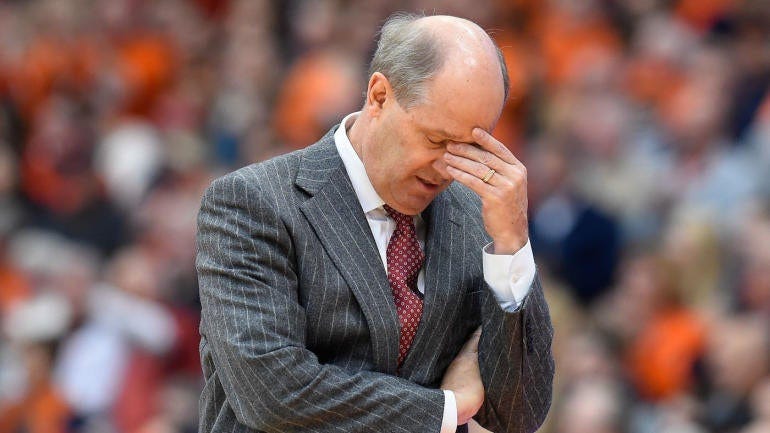
On April 6, hours before Michigan and UConn were set to tip off in the championship game of the 2026 NCAA Tournament, North Carolina surprised much of the men’s college basketball world by hiring former Denver Nuggets coach Michael Malone to lead its program.
While the move filled one of the most prestigious jobs in the sport, Malone’s appointment served another, admittedly less important purpose. After days and weeks of some of the biggest names in the game being tied to the vacancy, like Arizona’s Tommy Lloyd and Michigan’s Dusty May, Malone’s hiring assured that a sitting Division I head coach would not be lured away from their current position. And, with it, the coaching carousel at the major-conference level came to a momentary stop.
This year, like every other one before it, schools across the country embarked on an inexact science to try to identify the man they believe would be best fit to lead their programs to glory. The vast majority of administrators will fail in that mission, bringing someone aboard who falls well short of those lofty goals, sometimes disastrously so.
While coaches are overwhelmingly hired to one day be fired, some have spectacularly ill-fated tenures that are so bad, they raise the question of why the move was ever made in the first place.
Which is what brings us to today’s newsletter.
Back in Oct. 2024, I did a post on the nine worst college football coaching hires of this century. Naturally, I wanted to eventually do one for basketball, as well, and with the season over and the coaching carousel momentarily wrapped up, now seemed like as good of a time as ever.
Before we get going, a few caveats that I also had for the football hires post:
This is from this century, so from 2000 on. There are undeniably some egregious decisions from athletic directors from decades or even a century ago, but I feel like I’m ill-equipped to judge them seeing as I either wasn’t born yet or wasn’t old enough to be following college basketball and understand the full extent of the administrative bungling that took place.
This isn’t based purely on win-loss percentage, though that factors in. Some places are just absurdly hard to win at and I’m not going to include somewhere like Maine because they take a gamble on someone.
The process or rationale behind a hiring has to be bad to make it on here. Sometimes, a hire can make all the sense in the world on paper, but not simply work out in practice. Think of Archie Miller at Indiana or Chris Mack at Louisville as good examples. If I can see what an AD was thinking when they made the move, there’s a good chance I spared their hire from being included on here.
Unless a coach previously had some baggage to his name – and there are some notable exceptions – I don’t count hires whose tenures were torpedoed by scandal.
With that out of the way, let’s get going.
13. Matt Doherty, North Carolina
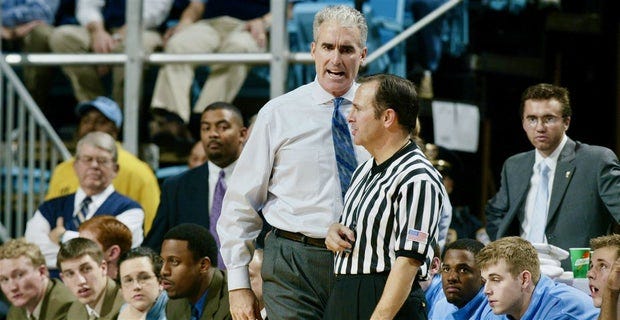
Years: 2000-03
Record: 53-43
This list starts off at an unexpected place, with someone who was named the national coach of the year nine months after they were hired. Little after that went right for Doherty in his return to his alma mater, though.
When Bill Guthridge stepped down as North Carolina’s coach on June 30, 2000, the Tar Heels wanted to stay within their family for their next hire. After an unsuccessful run at Roy Williams, they turned to Doherty, a former player at the school who had just led Notre Dame to an eight-win improvement in his first and only season at the school.
After going 26-7 and earning a No. 2 seed in the NCAA Tournament in his first season, the program cratered. In his second season, North Carolina went just 8-20, its fewest wins since 1962 (back when it played only 17 games) and the worst single-season win percentage in program history. The Tar Heels rebounded a bit the following year, going 19-16, but missed out on the NCAA Tournament, leading to Doherty’s ouster.
Under Doherty, a program that had made 27 consecutive NCAA Tournaments missed it in each of the final two years of his three-year run. Even with his stellar first season, he went 23-25 in ACC play, including a combined 10-22 mark in his final two seasons. Before that, the Tar Heels hadn’t finished below .500 in the ACC since the 1953-54 season – the conference’s first year of existence. Since Frank McGuire was hired by the school in 1953, Doherty has been the only North Carolina coach to win fewer than 69.8% of his games and he’s the only Tar Heels coach since 1916 to fail to win at least 60% of his games. Players and others around the program largely seemed to hate him, too.
The only reason he isn’t higher on this list is what he managed to leave behind – the starting five for a team that won the national championship two years after he was sacked.
12. James Johnson, Virginia Tech
Years: 2012-14
Record: 22-41
Seemingly frustrated by their annual place on the wrong side of the NCAA Tournament bubble, Virginia Tech fired Seth Greenberg in April 2012, 44 days after its season ended. To replace Greenberg, the Hokies opted not for a successful mid-major coach due for a step up, but Johnson, a first-time head coach who had been Greenberg’s top assistant the previous five seasons.
If it was a continuity play, it failed. Promising freshman Dorian Finney-Smith transferred to Florida, where he became a two-time All-SEC selection, and four-star recruit Montrezl Harrell switched his commitment to Louisville, where he was a key player off the bench for a Cardinals team that won the national title the next season. Once games started, it didn’t go any better. Over his two seasons as head coach, Johnson’s Virginia Tech teams went just 6-30 in conference play. His second and final squad went 9-22 and lost 16 of its final 17 games, leading to his ouster.
Oddly enough, Johnson is back at Virginia Tech, where he has been the director of high school relations since 2023. Something about that school and fired coaches finding their way back.
11. Wyking Jones, Cal
Years: 2017-19
Record: 16-47
Unlike Johnson, Jones was an assistant at a program that was in relatively good shape. Cal had made the NCAA Tournament and NIT in the previous two seasons under Cuonzo Martin and, going back to 2008-09, had won at least 20 games in seven of the previous nine seasons before Jones was promoted to head coach after Martin left for Missouri.
Jones fared even worse than Johnson, winning only eight games in each of his two seasons at the helm. Cal went 5-31 against Pac-12 teams in his two seasons and never finished above 241st on KenPom.
10. Tony Stubblefield, DePaul
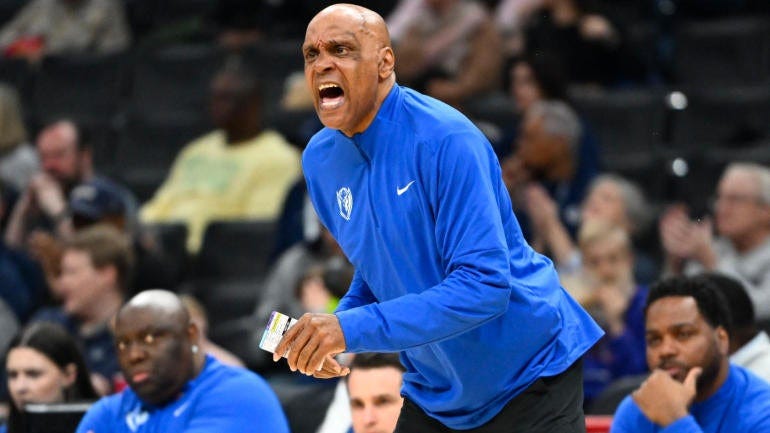
Years: 2021-24
Record: 28-54
I hesitated putting any DePaul coach in here given the immense difficulties inherent with that job, but this hiring was so ill-conceived that it had to be included (and, as Chris Holtmann is showing right now, the Blue Demons can at least be respectable with a proper hand leading them).
Stubblefield had been a career assistant when he was hired in at 51 years old in 2021 and had no connections to the Chicago area, with a four-year run as an assistant at Cincinnati being his geographically closest stop to the Windy City. He had an OK first season, going 15-16, but went 13-38 the rest of the way before being fired in Jan. 2024, 18 games into his third season. For whatever it might be worth, DePaul didn’t fare any better under interim head coach Matt Brady, going 0-14 the rest of the way to finish 3-29 overall and 0-20 in Big East play.
While it could have potentially been worse for the Blue Demons – they were reportedly zeroing in on Kenny Payne before pivoting to Stubblefield – it was very nearly significantly better. And for that, they only have themselves to blame. Before hiring Stubblefield, DePaul interviewed then-Duke assistant and Chicago native Jon Scheyer, who was thrilled about the possibility of coaching in the city where he grew up and was a high school basketball legend.
“It got crazy the last couple weeks,” Scheyer said to CBS Sports in 2025. “I thought I was going to be the coach at DePaul.”
Two months later, Mike Krzyzewski announced he would retire at the end of the following season, with Scheyer anointed as his successor. So while it’s possible Scheyer may have never coached a game at DePaul, it’s impossible not to think of what could have been.
9. Donnie Tyndall, Tennessee
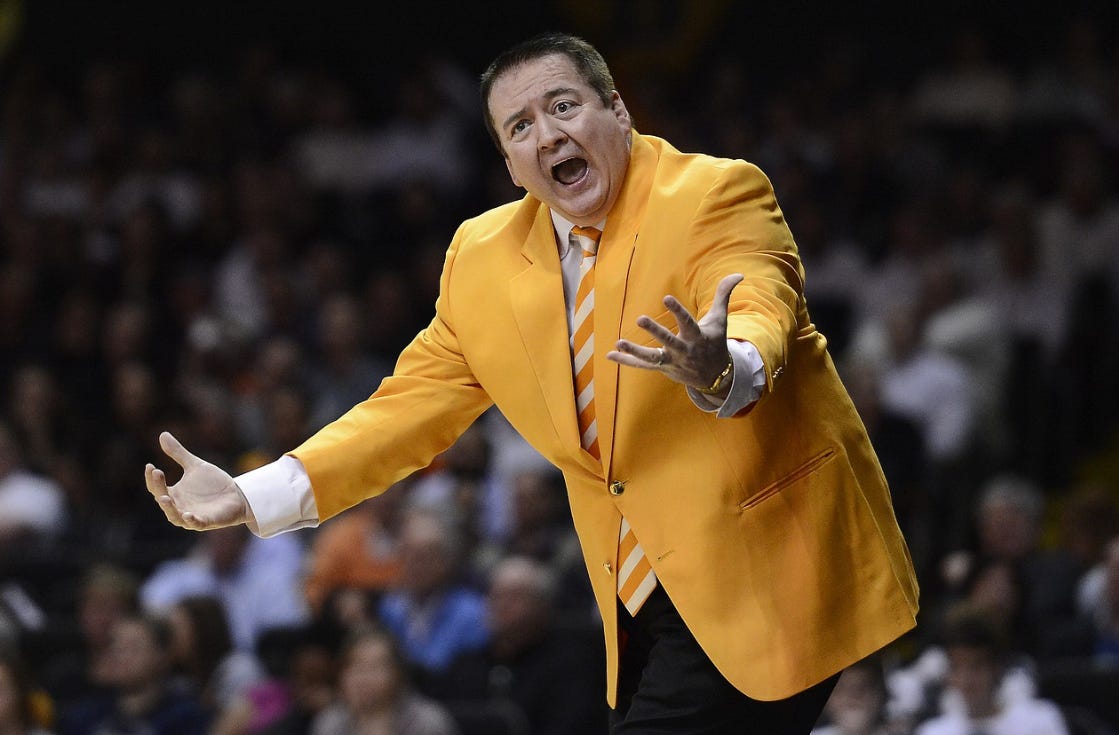
Years: 2014-15
Record: 16-16
When Tennessee hired Donnie Tyndall to replace Cuonzo Martin in 2014, the Vols were taking a chance on a coach who had made a name doing more with less. He made two NCAA Tournaments in three years at Morehead State, which hadn’t made the Big Dance in the previous 25 years. At Southern Miss, he won 56 games in two seasons, earning him a promotion to an SEC program coming off a run to the Sweet 16.
There were more than wins on his resume, though. When he was at Morehead State, the program was placed on probation for two years because of violations related to booster activity. Then, in 2015, only about a week after his first season with the Vols wrapped up, details from an NCAA investigation revealed a slew of academic fraud violations from his time at Southern Miss, including staff members completing junior college coursework for seven prospective players, five of whom eventually enrolled at the school. It ended with a 10-year show cause for Tyndall, who hasn’t coached at the NCAA level since.
Though the probe began in Oct. 2014, after Tyndall had already been hired by Tennessee, and while the Vols said Tyndall didn’t disclose anything about the misdeeds during the interview process (because why would he?) it’s the kind of thing that capable university leadership would at least be vaguely aware of when hiring for one of its most important positions.
8. Jeff Bzdelik, Wake Forest
Years: 2010-14
Record: 51-76
Though it’s widely viewed today as a small, overpowered private school doomed against bigger, better resourced programs in the ACC, Wake Forest basketball was a nationally relevant program in the not-so-distant past, with 14 NCAA Tournament appearances from 1991-2010. Then, in 2010, it all changed.
Fifteen months after his team was ranked No. 1 nationally, Dino Gaudio was fired as the Demon Deacons’ coach for what were described as “late-season and postseason performances.” In his final two seasons, Gaudio’s teams went 44-18 and made the NCAA Tournament twice, though they failed to win a game on both occasions.
Postseason disappointment at Wake Forest gave way to outright futility. The university turned to Bzdelik, who had NBA coaching experience and somehow made Air Force into a winning program, but who was most recently coming off a three-year run at Colorado in which he had gone 36-58 overall and 10-38 in the Big 12. The Deacs went 8-24 in his first season and only got so much better, going 17-51 in the ACC in his four seasons and never finishing higher than 117 on KenPom.
Perhaps Wake’s successful run in the 1990s and 2000s was unsustainable for a relatively disadvantaged school, but Bzdelik’s tenure tanked any ounce of momentum they had generated. In the 16 seasons since Gaudio’s firing, the Deacs have made the NCAA Tournament just once – in 2016, when they lost in the First Four.
7. Billy Gillispie, Kentucky
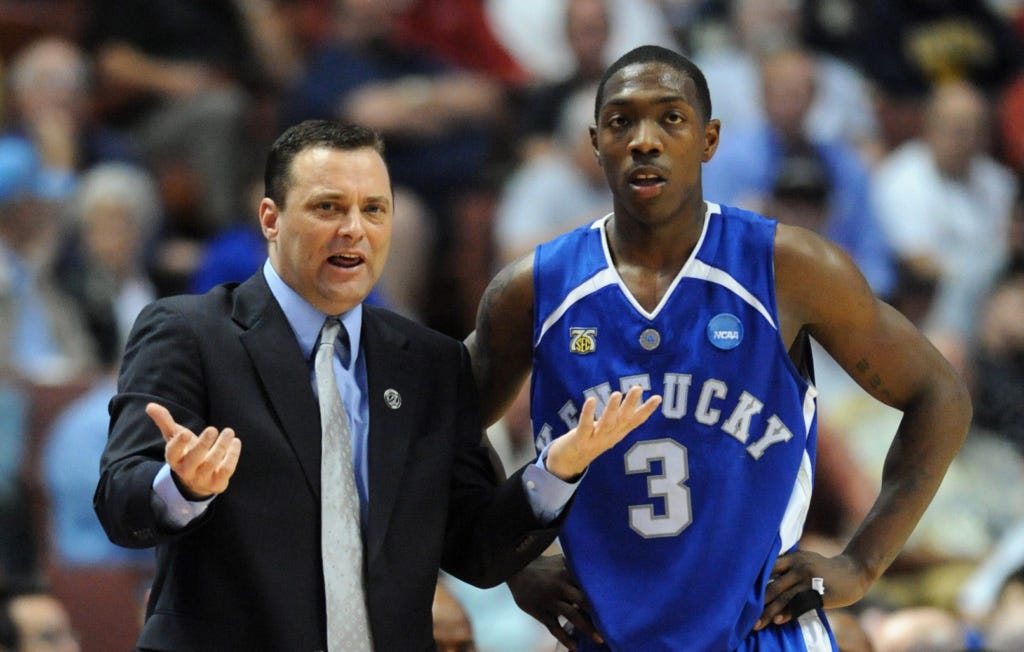
Years: 2007-09
Record: 40-27
The logic behind Gillispie’s hiring was seemingly sound. He had won at places almost nobody else had and did so quickly. He took over a UTEP program in 2002 that was coming off a 10-22 season and hadn’t made the NCAA Tournament in a decade. By his second season, he went 24-8 and made the Big Dance. At his next stop, Texas A&M, he inherited a program that had finished a season with a winning record just once in the previous 15 years. He proceeded to go 70-26, win at least 21 games every season and guided the Aggies to their first Sweet 16 in 27 years.
After Kentucky struck out on Billy Donovan, it sold itself on Gillispie behind a simple-enough rationale – if he was able to do all of that at those kinds of places, just imagine what he could do at a place like Kentucky.
What seemed workable in theory was anything but in practice. His first season in Lexington, the Wildcats won 18 games, their fewest since 1990, back when they were dealing with severe NCAA sanctions. The following season, they missed the NCAA Tournament for the first time since 1991, leading to Gillispie’s ouster.
While Gillispie’s do-more-with-less bona fides made him that much more appealing at a school with Kentucky’s resources, being the basketball coach at that kind of a program is more than just running practices, watching film and recruiting. You’re almost a political figure, someone who has to navigate complex power structures and be a public figure in a way that would make the vast majority of people in the profession uncomfortable. Gillispie, a brusque and awkward man who had only worked in the sport’s proverbial shadows, wasn’t cut out for the life of gripping and grinning that awaited him in the Bluegrass State, something an athletic director should have picked up on during the vetting and interview process.
“There is a clear gap in how the rules and responsibilities overseeing the program are viewed,” athletic director Mitch Barnhart said after Gillispie was axed. “It is a gap I do not believe can be solved by just winning games.”
Gillispie also struggled with alcohol abuse, having been involved twice with drunk driving incidents before he got to Kentucky and having been arrested for one five months after he was fired at Kentucky.
One of the things that made him so ill-equipped for the job was also what gave us one of the greatest post-firing walk of shames in American sports history – when he evaded reporters after his sacking by pretending like he was on the phone.
6. Isiah Thomas, FIU
Years: 2009-12
Record: 26-65
One year after a disastrous two-season stint as the New York Knicks head coach, Thomas was hired at Florida International, which was hoping his Hall of Fame credentials as a player could make up for having no experience coaching in college.
It went as poorly as you might imagine. The Panthers have made the NCAA Tournament just once in their nearly 40-year existence, but Thomas dragged them to new lows, never winning more than 11 games and going just 14-36 in Sun Belt play. What made his hiring even more inexcusable was that just three years before he was brought aboard at FIU, he had been accused of sexual harassment as part of a lawsuit against the Madison Square Garden Company.
5. Kim Anderson, Missouri
Years: 2014-17
Record: 27-68
Maybe the shrewdest thing a program at the low- or mid-major level can do when hiring is a coach is trying to pluck a successful Division II head coach, a strategy more programs have employed in recent years following the success of Ben McCollum and Josh Schertz, among others. Winners win, after all.
At the major-conference level, the strategy doesn’t work nearly as well. It’s simply too big of a jump and even in the pre-NIL era, the levels of the sport are different to the point of being unrecognizable.
Just look at how things worked out for Missouri under Anderson. After Frank Haith left for Tulsa in 2014, the Tigers turned to Anderson, an alum and former player who had just led Central Missouri to a Division II national title to cap off a decorated 12-year run at the school. He wasn’t able to come anywhere close to that at his alma mater, where each of his three teams finished last in the SEC and combined to go 8-46 in league play. He struggled mightily in recruiting, never landing a player ranked among the top 150 prospects in the country (according to 247) during his two full recruiting cycles, and finishing No. 49 and No. 65 in the team recruiting rankings in those years.
Anderson’s tenure is even worse compared to its immediate predecessors and successors. Missouri won at least 23 games in each of the six seasons before Anderson was hired and won 20 the season after he was canned.
4. Mike Dunleavy Sr., Tulane
Years: 2016-19
Record: 24-69
Though some, particularly longtime college basketball insider Jeff Goodman, are borderline militant against the idea of a college program hiring someone from the NBA ranks, it’s a move rooted in sound-enough logic. At least before the influx of NIL money, few things were more enticing to a recruit than the idea of playing for a coach who had NBA connections and knew what it took to get there. In other instances, like Juwan Howard at Michigan and Patrick Ewing at Georgetown, a school was bringing in a program legend who had paid his dues for years as an NBA assistant.
Nothing, however, made sense about Tulane’s hire of Dunleavy in 2016. He had spent the entirety of his coaching career to that point in the NBA, having never held a college job. He had no connections to New Orleans or Louisiana. He wasn’t even active, as he had been away from the sideline for six years when the Green Wave hired the then-62 year old.
Amazingly, it didn’t work out. He went 6-25 in his first season and 4-27 in his third, the latter of which ended with a 21-game losing streak that ultimately cost him his job. His third and final season at the school marked the first and only time Tulane has ever gone winless in conference play in a season.
3. Kevin Stallings, Pitt
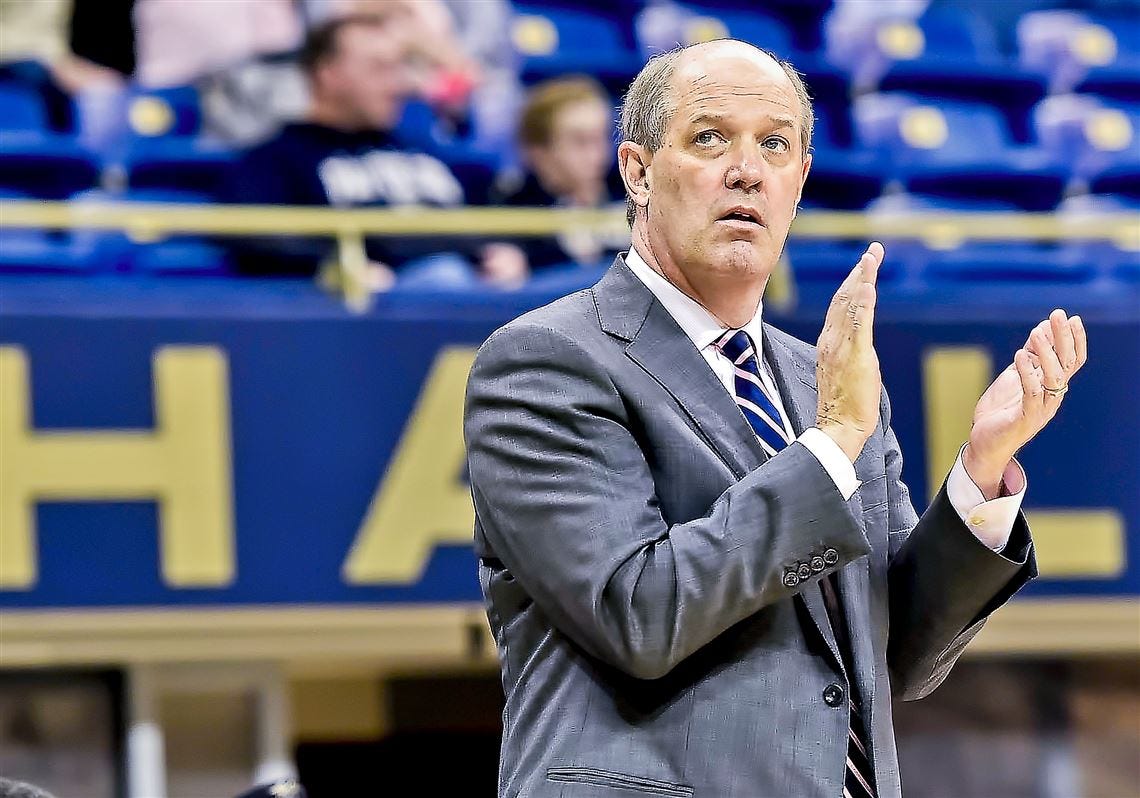
Years: 2016-18
Record: 24-41
Under Ben Howland and Jamie Dixon, Pitt became an unlikely powerhouse in the 2000s and early 2010s, making the NCAA Tournament 13 times in a 15-season stretch from 2002-16 and finishing in the top 20 of the final Associated Press poll 10 times during that stretch. The Panthers never made the Final Four, but they were regularly one of the best teams in the ruthlessly competitive Big East and enjoyed one of the best home-court advantages in the sport at the Petersen Events Center.
By the final years of Dixon’s 13-year stint at the school, the program’s fortunes started to wane, with Pitt missing the NCAA Tournament in two of his final five seasons and never earning better than a No. 8 seed once there. Believing the Panthers had hit their ceiling under Dixon, then-athletic director Scott Barnes reduced Dixon’s buyout to allow him to return to his alma mater, TCU, in 2016.
What could be seen as a daring but potentially fruitful move from an ambitious AD became something else entirely by the end of the search for Dixon’s replacement. Barnes brought in Stallings, who was on the verge of getting fired after a lengthy stint at Vanderbilt. In Stallings, Pitt effectively got a much worse version of Dixon – a coach who had his share of success at a given program, but whose tenure had arguably gotten stale. While Dixon won 72.7% of his games at Pitt and made the NCAA Tournament 11 times in 13 seasons, Stallings won 60.1% of his games at Vanderbilt and made the tournament seven times in 17 seasons, an achievement gap that existed despite Stallings coaching in what was then a significantly easier conference.
Seemingly everything that could have gone wrong for Stallings at Pitt did. Barnes, the AD who stuck his neck out to hire him, left for Oregon State 12 games into Stallings’ first season. Despite inheriting a talented and experienced team from Dixon, Stallings posted the program’s first losing season in 17 years in his first season. Once all those players were gone, things got significantly worse, with a young roster short on talent that Stallings had assembled doing 8-24 in his second season, including a winless mark in ACC play. Two days after their final game, Stallings was fired.
While there was nothing in Stallings’ past to indicate his teams would bottom out quite like that, many of the biggest reasons for skepticism with his hire came to fruition. He struggled coaching in a tougher and deeper conference than he was used to with the SEC, going just 4-32 in the ACC. His recruiting was horrid, with the No. 112 class in 2016 (when he lazily opted to keep a class Dixon had assembled for his system) and the No. 51 class in 2017 (that was only that high because he had seven commits, none of whom were better than three stars). In an infamous photo that came to define his Murphy’s Law of a tenure, Stallings appeared to be asleep in the stands during a high school game he was scouting in his final season. As someone who covered Pitt for the entirety of his run at the school, he very much struck me as a sharp and accomplished coach who was largely checked out and was not enjoying life somewhere on a golf course only because someone, inexplicably, gave him a shot at coaching a power-conference program at that late stage in his career.
The effects of Barnes’ baffling decision have lingered. Over the past 10 seasons, Pitt has made the NCAA Tournament just once, a period in which it has finished below .500 seven times. While some of that can be tied to Jeff Capel and a pair of ill-advised contract extensions he was granted, that tailspin began with Stallings.
2. Kenny Payne, Louisville
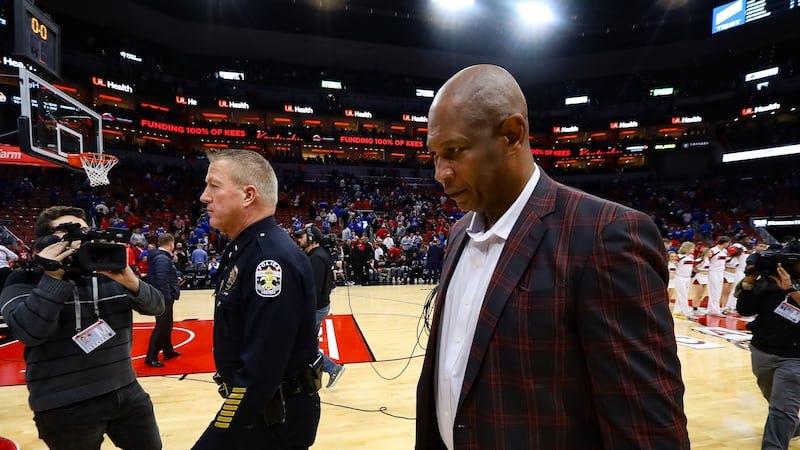
Years: 2022-24
Record: 12-52
To butcher the famous line from the legendary Playa Haters’ Ball sketch on “Chappelle’s Show,” what can I say about Kenny Payne’s Louisville tenure that hasn’t already been said about Afghanistan?
Every lurid detail of Payne’s woeful two-year run with the Cardinals would make this newsletter laughably longer than it already is, so we’ll go with the highlights:
Went 5-35 in ACC play
Of his 52 losses, 33 came by at least 10 points
He had more losses by at least 20 points (14) than wins (12)
Had more losses in his two seasons (52) than Rick Pitino did in his final six at the school (47)
Lost to Bellarmine, Wright State, Appalachian State, Chattanooga (by 10), Arkansas State (by 12) and Lipscomb
The Cardinals’ four wins in Payne’s first season in 2022-23 were their fewest since 1940-41.
Lost both of his preseason exhibition games at the school to a pair of Division II teams, including a Lenoir-Rhyne squad in 2022 that beat the Cardinals by 10 before going 6-12 in its conference that season.
Said after a loss to Indiana in Nov. 2023 that Indiana coach Mike Woodson “tricked” him by switching at one point to a zone defense.
In what would be his final postgame press conference, he chided critical fans by comparing them to passengers who fled the Titanic, a literal sinking ship.
To be that horrible is one thing. To be that at one of the sport’s historic powerhouses and financial juggernauts is a special, generational kind of incompetence.
In some ways, Payne was a justifiable hire on paper. He was a former player at the school, had the backing of many of Louisville’s most prominent basketball alums, had spent 10 seasons as one of John Calipari’s top assistants and recruiters at Kentucky, and was coming off a two-year stint as an assistant coach with the Knicks.
Still, the warning signs were there. Even though he was part of successful teams as an assistant, he was rarely active on the bench. He was seldom, if ever, diagramming plays during a timeout or offering players some in-game instruction. When I spoke to people in the industry around the time of his hiring, the general sense was that Payne was a perfectly fine assistant who, based on his personality and background, likely wasn’t cut out to run his own program, much less one of the sport’s 10 most historically successful brands. One person described a prospective Payne reign at Louisville a little more bluntly, describing it as “a disaster.”
It turns out he may have been underselling it.
1. Greg Heiar, New Mexico State
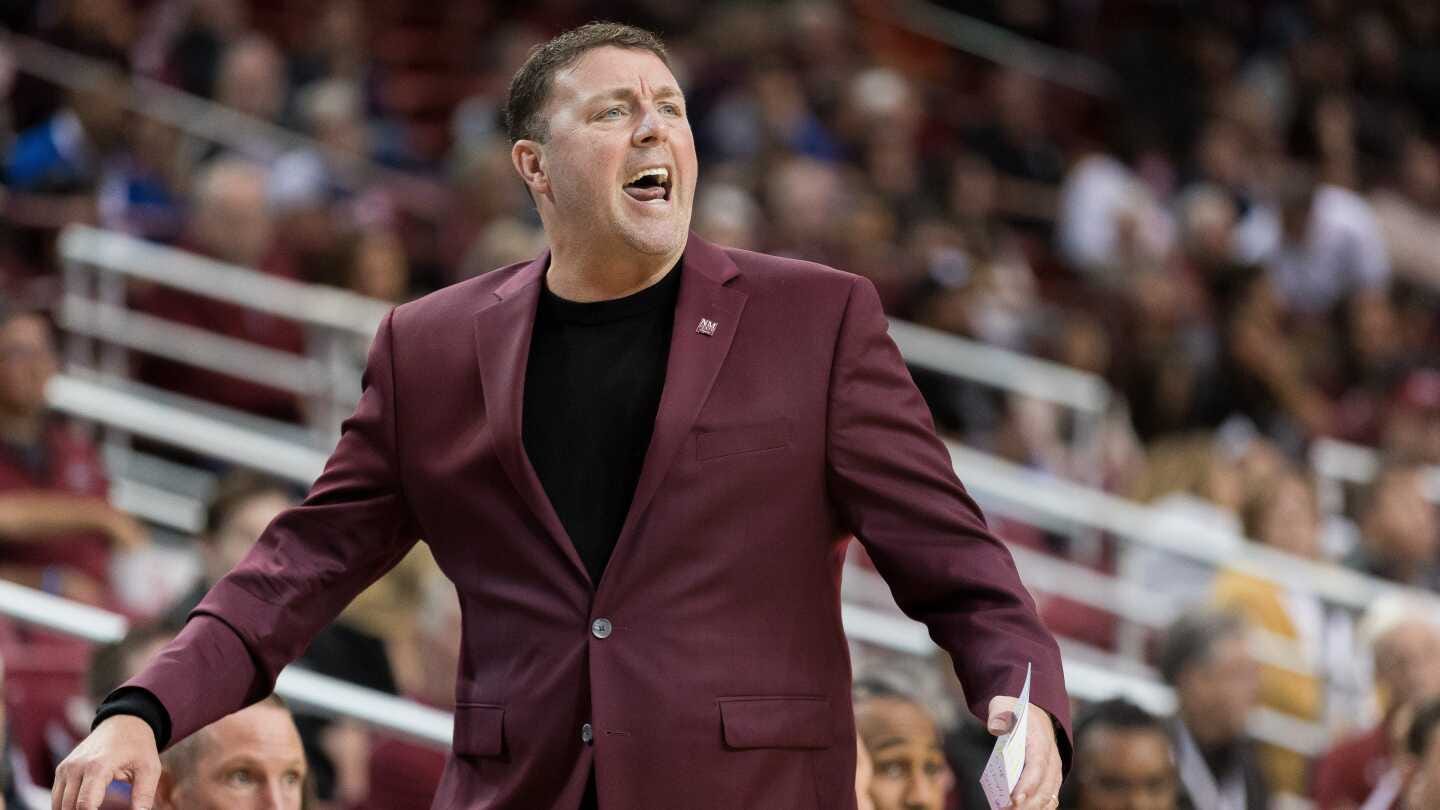
Years: 2022-23
Record: 9-15
This dubious distinction atop the list has much more to do with what happened off the court than on it.
To be clear, Heiar’s lone Aggies team wasn’t very good, going just 9-15 overall and 2-10 in the Western Athletic Conference after he took over a program that had gone to the NCAA Tournament 10 times in the previous 16 seasons, including a 27-7 campaign the season before he arrived.
But there was, sadly, much more.
Heiar came to New Mexico State from the junior-college level, but a significant portion of his coaching upbringing came under Gregg Marshall and Larry Eustachy, both of whom had been fired from jobs for player mistreatment. In his introductory press conference, Heiar spoke glowingly of both men,
In August, three months before his first game, one of Heiar’s assistants was arrested in Chicago for forging documents to help accused criminals expand the range of their electronic monitoring anklets or get charges improperly dropped. Three months later, before his team was set to play rival New Mexico, one of his players broke curfew and shot and killed a New Mexico student in what police later determined to be an act of self-defense. Then, in February, an investigation cited three of his players for false imprisonment, harassment and criminal sexual contact against a teammate. That trio of players allegedly pinned down the victim and “removed his clothing exposing his buttocks and began to ‘slap his [buttocks]’” while also touching his scrotum.
After the report came out, university leadership canceled the remainder of the season while placing Heiar and his staff on paid administrative leave.